
Solo at a Festival? Safety Tips + Why a Bell Tent Village Makes It Better | The Canvas Co

There’s a quiet shift happening across festivals, gigs and club nights: more people are going solo—and absolutely loving it.
Ticketmaster’s UK research found that solo festival attendance has grown dramatically in the last few years, rising from 8% in 2019 to almost one in three by 2025. And The Guardian’s October 2025 feature on the rise of solo gig and festival attendance captures the mood perfectly: people are choosing freedom, not waiting around for the group chat to align.
If you’ve ever wanted to go but hesitated because your friends aren’t into the lineup, can’t afford it, or can’t get the time off—this is your sign. Going to a festival alone isn’t “sad” or “weird”. It’s confident, practical, and often surprisingly social.
And if you’re thinking: Sure… but what about safety? What about camping alone? What if I feel awkward?—you’re not the only one. Those are real concerns. But with the right plan (and the right kind of accommodation), solo festivals can be one of the most empowering, comfortable, joy-filled weekends you’ll have all year.
Let’s talk about why.
Why more people are going to festivals and events solo
1) People don’t want to miss out anymore
Post-pandemic, lots of us are less willing to postpone joy. The Guardian reported that many solo attendees simply stopped waiting for others to be free, interested, or organised enough.
And it’s not just vibes—there are practical reasons too. A solo attendee interviewed by The Guardian pointed to the cost-of-living crunch: it’s harder to find friends who both want to go and can afford it. So you go anyway.
2) Music-first culture is growing
For many people, festivals aren’t a social event with music attached—they’re a music event with social potential.
Ticketmaster’s survey found that 38% of solo attendees said their primary reason for going alone was a strong interest in a particular artist or genre.
That rings true if your taste is a bit niche, your friends aren’t fans, or you’re the one person who always cares deeply about the lineup. If you’re going to spend money and energy on a weekend, you want it to be worth it—on your terms.
3) Solo no longer feels taboo
Going alone used to come with a weird stigma. Now? People go solo to restaurants, cinemas, holidays—and festivals are catching up.
The Guardian highlights how online communities and dedicated solo-friendly festival spaces are helping normalize it even further.
Some festivals are actively designing for solo guests now. For example, The Guardian mentions dedicated solo camping areas and the growing infrastructure around solo attendance. That matters: the more festivals build for solo-goers, the more confident people feel about doing it.
The real reason solo festivals can feel so good - freedom

Here’s the thing nobody tells you until you’ve done it: going solo is like switching your festival experience to “custom mode”, because you’re not negotiating the whole weekend with anyone else.
You want to:
arrive early and get straight into the atmosphere? Done.
spend three hours at one stage because the crowd feels perfect? Easy.
take a nap mid-afternoon then head back out for the sunset set? Absolutely.
see the weird experimental act your friends would roll their eyes at? You’re already there.
There’s also a quieter kind of confidence that comes from navigating a festival alone—checking in, setting up your base, making your own choices, meeting people when you feel like it. It can be genuinely validating.
But let’s be honest: the barriers are real
If you’re hesitating, it’s usually not about the music.
It’s about:
“Will I be safe?”
Safety concerns are the biggest reason people hold back—especially women.
A 2024 survey reported that a large majority of women hadn’t attended a live music event alone, with confidence and safety concerns topping the list.
That doesn’t mean solo festivals are inherently unsafe. It means the perceived risk is high—particularly around walking alone at night, camping alone, or dealing with unwanted attention.
“Will I feel awkward?”
The first hour can feel strange if you’re used to arriving with friends. There’s no “buffer” conversation. No one to say, “Where do you want to go first?”
But awkwardness is usually short-lived. Festivals are made for strangers to become temporary friends. People talk. People help each other. People are there for the same reason: a shared love of music.
“Will I get lonely?”
Sometimes, in the quiet moments—waiting between sets, walking back to camp—you might feel a pang of loneliness.
But solo doesn’t have to mean isolated. Many solo-goers actively want to meet people: Ticketmaster found 31% of solo attendees said meeting new people was a driver for going alone.
And unlike in everyday life, festival conversations are easy. Everyone’s already got common ground.
How to do a festival solo safely.
Safety isn’t about being afraid. It’s about being prepared.
Here’s what genuinely helps:
1) Choose your base like it matters (because it does)
Your accommodation is your anchor. It’s where you:
recharge
sleep
regroup when you feel overwhelmed
put your stuff
reset your mood
If you’re solo, that base matters even more.
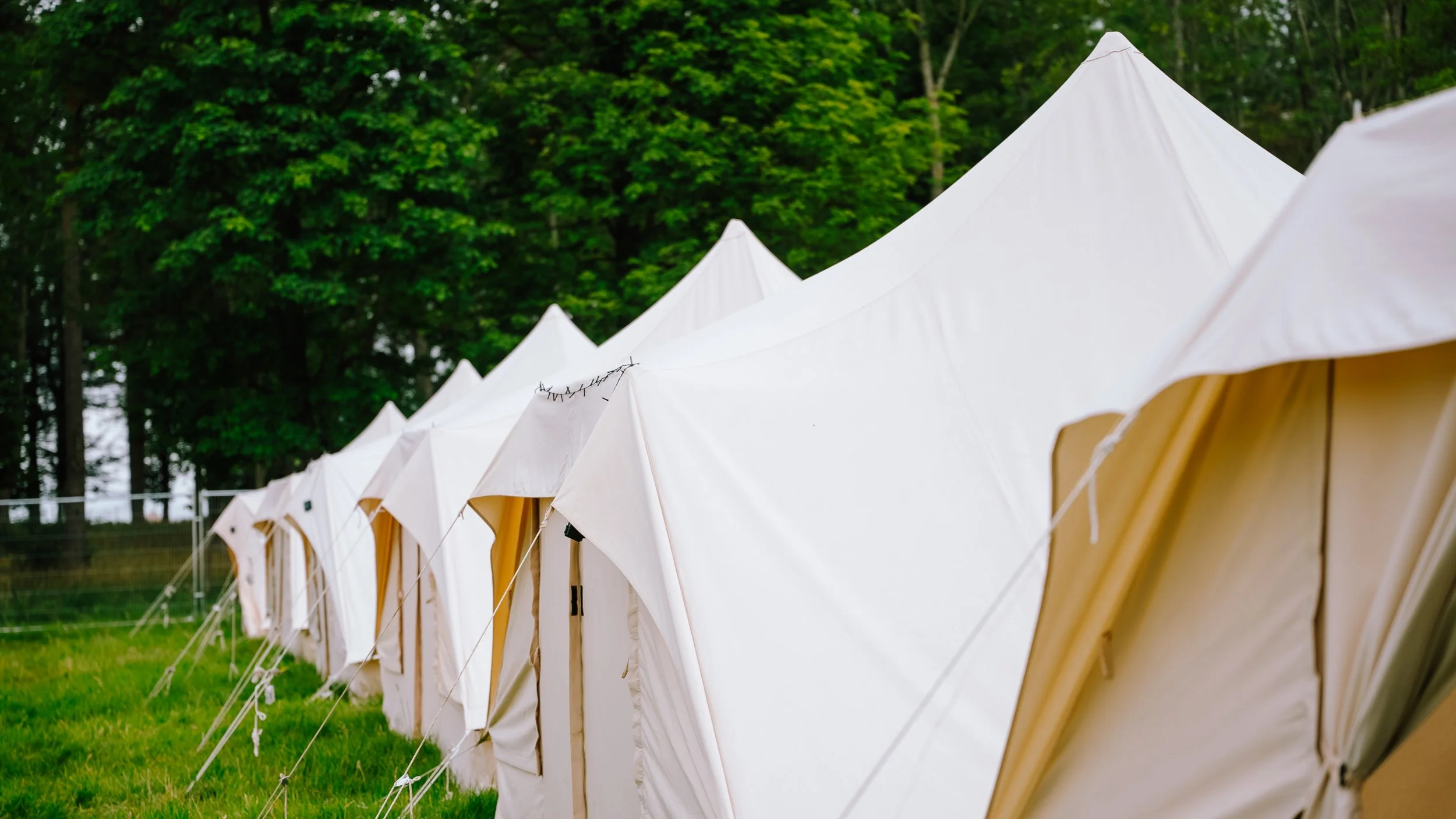
This is exactly where bell tent villages come in—and why they’re such a powerful upgrade for solo attendees.
2) Use the “festival safety net”
Many festivals now have strong welfare infrastructure—staffed help points, medical tents, security patrols, and clearer reporting routes.
Before you go, locate:
welfare/medical points
information tents
security hubs
well-lit routes between arenas and campsite
Do it while it’s still daylight so you’re not figuring it out at 1am.
3) Share your plan (without overthinking it)
Tell one trusted person:
where you’re going
what festival you’re at
where you’re staying
when you plan to travel home
Agree on a simple check-in rhythm—nothing intense, just reassuring.
4) Protect your phone like it’s oxygen
Your phone is your map, ticket wallet, torch, lifeline, camera and connection home.
Bring:
a power bank
a short charging cable
a waterproof pouch
Bonus tip: save key info offline (festival map screenshot, important numbers, your accommodation location).
Why bell tent villages make solo festivals feel safer
Traditional camping can be brilliant—when you’re with a group.
But solo camping often comes with friction:
pitching a tent alone
hauling gear alone
sleeping lightly because you’re hyper-aware
worrying about your stuff when you’re away
dealing with late-night chaos and noise
A bell tent village changes the feel of the whole weekend.
At The Canvas Co, our bell tent villages are designed to give you the best parts of camping—community, atmosphere, that “festival bubble”—without the stress.
Here’s how it supports solo guests in the three ways that matter most:
Arrive easy
Arriving solo can be the hardest part: carrying everything, finding a spot, setting up, and doing it all while the festival energy is already buzzing.
With a bell tent village, your base is already there.
You arrive, check in, drop your bag, and you’re instantly settled.
That matters because the less effort you spend “surviving” the setup, the more energy you have for the actual festival.
Sleep well
Sleep is where solo festivals are won or lost.
If you’re tired, everything feels harder: navigating crowds, staying alert, managing your mood, meeting people.
Ticketmaster’s wider festival data shows huge demand for upgrades that improve comfort—nearly half of VIP package demand is driven by things like better facilities and rest.
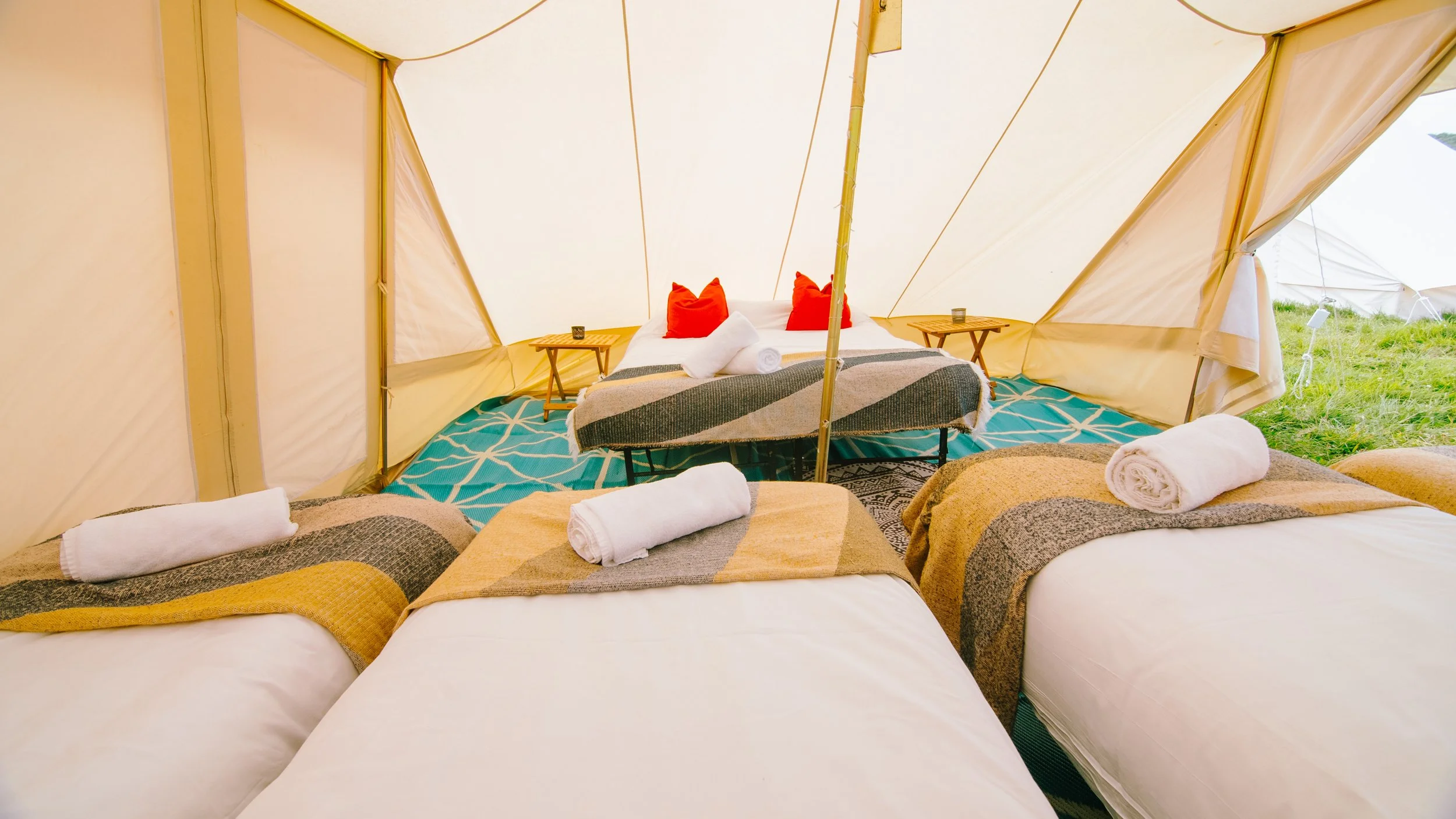
A bell tent village gives you:
more comfortable sleeping setup
more space
a calmer environment than the busiest camps
a proper “reset zone” for mid-day breaks
Better sleep doesn’t just make you feel better—it makes you feel safer and more capable.
Feel safe
Safety isn’t just security patrols. It’s feeling grounded.
Bell tent villages support that because:
you’re in a managed, clearly defined area
you have staff nearby
you’re surrounded by other guests who’ve opted into a similar vibe (more comfort-forward, less chaos)
it’s easier to remember where “home” is
For solo guests, this creates a subtle but powerful shift:
you’re not alone in a field—you’re part of a small village.
And that makes it easier to relax, make casual connections, and enjoy the festival fully.
How to do solo festivals in comfort (step-by-step)
If you want a simple solo festival plan, here it is:
Step 1: Pick your festival intentionally
Choose something that fits your energy:
big and iconic (huge lineup, lots of anonymity)
boutique and community-driven (easier to meet people)
genre-specific (instant shared identity)
Step 2: Choose accommodation that supports you
If you’re nervous about solo camping, don’t force it.
You’re not “less of a festival person” for wanting comfort.
A bell tent village is a practical choice—especially for your first solo festival.
Step 3: Build in micro-moments of connection
Plan just one small social “anchor” each day:
chat to your neighbours
join a morning coffee spot
meet someone at a smaller stage
say yes to one casual conversation
That’s enough. The rest will happen naturally.
Step 4: Protect your rest like a headliner slot
Eat properly. Hydrate. Sit down. Nap.
If you’re solo, you’re the whole team. Treat yourself like one.
Step 5: Leave with a confidence boost (not burnout)
The best solo festival experience isn’t the one where you never feel nervous.
It’s the one where you feel nervous… and do it anyway.
The bottom line: solo doesn’t mean lonely
The rise of solo festivals isn’t a trend based on isolation—it’s a trend based on agency.
People are choosing music. Choosing freedom. Choosing experiences. Choosing to stop waiting.
And when you combine that independent energy with an accommodation setup that makes you feel safe, rested, and supported—like a bell tent village—you don’t just “get through” a solo festival.
You thrive.
So if you’ve been thinking about it, consider this your permission slip:
Go solo. Go comfortably. Go confidently.
We’ll keep the light on in the village.